brushless motor kv rating
A brushless motor kv rating represents the speed constant that determines how fast a brushless motor rotates per applied voltage. Measured in RPM per volt (revolutions per minute per volt), the brushless motor kv rating is a critical specification that directly influences motor performance and selection. Understanding this rating helps engineers and enthusiasts choose the right motor for their specific applications.
The brushless motor kv rating operates on a simple principle: higher kv ratings produce faster motor speeds at the same voltage, while lower kv ratings generate more torque at reduced speeds. This inverse relationship between brushless motor kv rating and torque output makes it essential for matching motors to application requirements. Technologically, the brushless motor kv rating reflects the motor's electromagnetic design, including winding configuration and pole count.
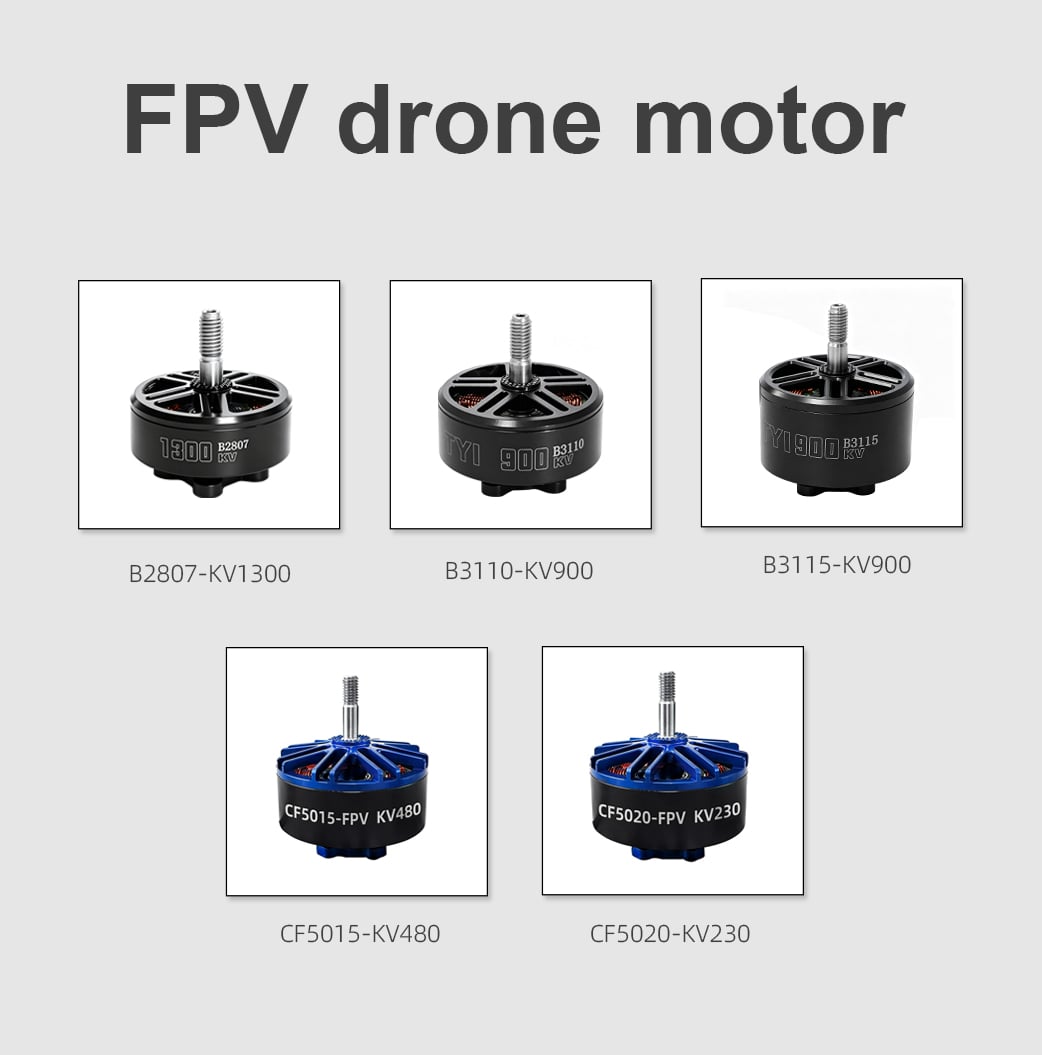
Applications for brushless motor kv rating knowledge span across numerous industries. Drone manufacturers rely on brushless motor kv rating specifications to optimize flight characteristics and payload capacity. Electric vehicle designers use brushless motor kv rating data to balance acceleration and efficiency. Robotics engineers apply brushless motor kv rating principles to achieve precise motion control. The brushless motor kv rating also matters in hobby-grade RC cars, boats, and aircraft, where performance depends on selecting appropriate motor speeds. Industrial automation systems utilize brushless motor kv rating ratings to ensure reliable, consistent operation. Understanding your specific brushless motor kv rating needs enables optimal equipment performance across these diverse applications.

 EN