
 EN
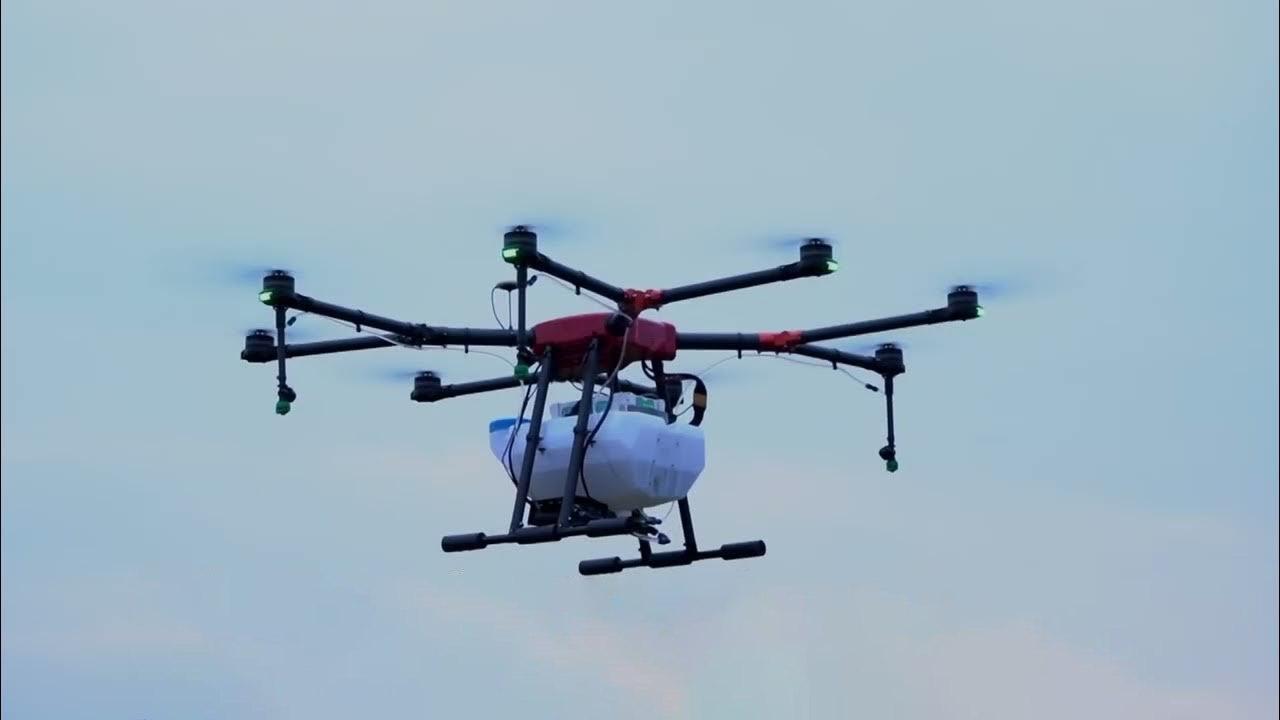
A spray drone’s payload capacity is best understood by separating tank volume from total aircraft payload. The featured six-axis agricultural model has a 16-liter spray tank, so a spray drone of this type can carry up to 16 liters of liquid when filled to its stated tank capacity. That figure is a useful starting point for planning, not a complete measure of takeoff weight.

For a spray drone, 16 liters describes the tank’s nominal liquid volume; it does not automatically mean the aircraft can carry 16 kilograms of any material under every operating condition. Liquid density, battery, spray equipment, and the manufacturer’s weight limits all matter. Understanding that distinction helps operators estimate practical capacity, plan refills, and avoid treating tank size as the aircraft’s entire payload rating.
Understanding the 16-Liter Capacity
Tank volume and payload weight are different measures
A 16-liter tank tells you how much space is available for spray liquid. For water-like mixtures, liters and kilograms may be close for a rough planning estimate, but the exact mass depends on the formulation. A spray drone carrying fertilizer solution or a denser mixture may reach its allowable takeoff weight before the tank is filled to the brim.
The 16-liter specification is therefore a volume limit, while payload weight is part of a broader aircraft limit. A spray drone also carries its frame, batteries, motors, pumps, and other installed components. Operators should use the product documentation to confirm maximum takeoff weight and permitted payload rather than infer those figures from tank capacity alone.
What the stated capacity means in the field
In routine planning, a full 16-liter tank gives a clear reference for estimating liquid consumption and refill frequency. A spray drone may not use every liter in every pass, since field shape, application settings, and safe landing reserves influence the amount loaded. Leaving room for operational flexibility can be more useful than planning every sortie around a completely full tank.
The actual usable load also depends on the mix being applied and the task. If a spray drone is assigned to a treatment requiring a specific concentration, operators need to calculate the required water and product quantities together. That avoids exceeding tank volume or weight limits while maintaining the intended application rate across the target area.
The aircraft’s six-axis configuration identifies its rotor arrangement, not a separate payload measurement. It should not be interpreted as proof of a particular lifting capacity. For this spray drone, the stated 16-liter tank is the practical capacity detail available for planning, while the official operating limits determine whether a given filled load is permitted.
Factors That Change Usable Payload
Liquid, equipment, and operating limits
Liquid density affects how much a filled tank weighs. Water-based mixtures provide a familiar reference, but concentrated fertilizers, additives, and other formulations can differ. Before loading a spray drone, check the product label and calculate the mixture’s total mass where the information is available. This is especially important when the tank is near its nominal 16-liter volume.
Installed equipment also contributes to takeoff weight. Batteries, guards, sensors, and spray hardware may be included in a published configuration or supplied as separate components, so confirm what the rating covers. A spray drone should be assessed in its actual flight-ready configuration, not as an empty frame or a tank-only assembly.
Conditions that shape a safe working load
Weather and site conditions do not change the tank’s stated volume, but they can affect a sensible mission load. Wind, temperature, field elevation, and the distance to the work area may influence flight planning and reserve decisions. Operators should follow the manual’s limits and local rules instead of assuming a spray drone can always launch with the maximum tank fill.
A practical load plan accounts for the route, expected application, and landing reserve. If a job involves a long transit or uneven terrain, using a smaller load may simplify handling and leave more margin. The spray drone’s 16-liter tank establishes the upper volume reference, while each mission plan should determine the appropriate amount to carry.
Calibration matters because the amount discharged per area determines how quickly the tank empties. Nozzle choice, flow setting, speed, and target rate all influence coverage and refill needs. A spray drone operator can estimate how much liquid a route requires by testing settings, measuring output, and comparing the planned area with the task’s application instructions.
Applying Capacity to Field Planning
Estimating coverage and refill needs
Tank capacity alone cannot specify the area covered per flight. Coverage depends on the application rate, effective swath, overlap, terrain, and route efficiency. To estimate a spray drone’s useful coverage, start with the required volume per unit of area, then compare that requirement with the liquid actually loaded and available for application.
For example, divide the usable tank volume by the planned application rate to estimate treated area before allowing for turns, overlap, and residual liquid. This calculation gives an estimate, not a guaranteed field result. A spray drone may need more frequent refills where access is difficult or where the treatment plan calls for a higher application rate.
Choosing a suitable load for each task
Match the load to the job rather than filling the tank automatically. Small plots, narrow boundaries, and test applications may call for partial fills that reduce unused mixture at the end of a task. A spray drone can be planned around the amount needed for a defined block, provided the resulting takeoff weight remains within the stated limits.
For larger operations, refill timing and mixing logistics can be as important as tank size. Keep a consistent record of area treated, liquid used, and settings so estimates improve over successive missions. These observations help teams determine whether a 16-liter spray drone tank suits their workflow or whether their routes require different staging and refill arrangements.
Before each operation, verify the approved payload and maximum takeoff weight in the supplied documentation. Inspect the tank and spray system, confirm the liquid mixture, and account for all installed equipment. If a load calculation is uncertain, reduce the fill and seek clarification rather than assuming the spray drone can safely handle a full tank in every configuration.
FAQ
How much liquid does this spray drone tank hold?
The featured model has a nominal 16-liter tank. That describes liquid volume, not the total aircraft payload in kilograms. A spray drone should be loaded according to both the tank specification and the operating weight limits in its documentation.
Does a 16-liter tank mean the aircraft carries 16 kilograms?
Not necessarily. The mass depends on the liquid’s density, and the complete takeoff weight includes the aircraft, batteries, and installed equipment. Confirm the permitted load for the spray drone and the exact flight-ready configuration before filling the tank.
How do I estimate coverage from tank capacity?
Use the planned application rate to estimate the area that the usable liquid volume can treat, then account for overlap, turns, and residual mixture. Field testing helps refine the estimate for a spray drone operating under your actual crop, route, and application conditions.


